Glass Wool

Professional Glass Wool Supplier


Tianjin tiantai formwork initially focused on the sales and leasing of formwork and scaffolding in the domestic market. It has accumulated a solid industry foundation by virtue of high-quality products and professional services. They are essential for residential buildings (high-rises, villas), public/commercial structures (malls, stadiums), industrial projects (factories, power plants), and infrastructure constructions (bridges, dams).


Why Choose Us


Quality Certification
Our company has passed work safety standardization certification, ISO 9001-2008 international quality management system certification, OHSAS 18000 occupational health and safety management system certification, as well as Germany TUV "GS" product safety certification, IIW international welding certification, SGS certification, EU Construction Products Regulation (CPR) certification, and UK BS 1139 certification.


Advanced Production Equipment
Our factory is equipped with CNC shearing machines, fully automatic welding robots, semi-automatic gantry welding machines, punching machines, hot-dip galvanizing production lines, shot blasting cleaning machines, etc.


Global Markets
It launched export business in 2024, with products sold to Canada, Australia, the five Central Asian countries, the Middle East, Southeast Asia and other regions.


End-to-End Service
The company's professional technical team provides comprehensive, closed-loop services covering every stage—from initial solution design consultation, customized technical adaptation, and on-site installation guidance, through to post-implementation operations and maintenance support.


Parameters


Thermal Conductivity:

0.035 W/m·K

Density:

80–150 kg/m³

Thickness:

Available from 25mm to 100mm (customizable)

Fire Rating:

Class A1 (Non-combustible)

Water Absorption:

≤1%

Temperature Resistance:

Up to 650°C (1202°F)

Sound Absorption:

NRC ≥ 0.90

Tensile Strength:

0.05~0.15MPa


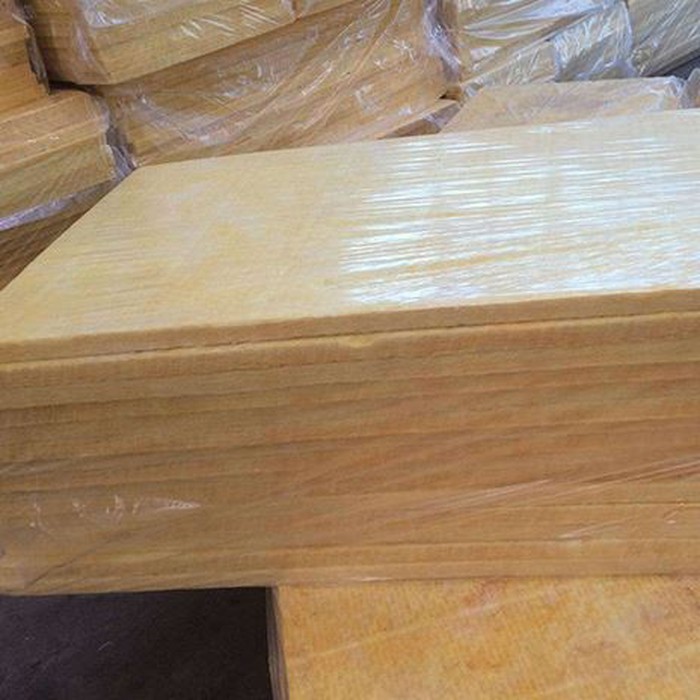
Glass Wool Insulation 50mm


Materials of Glass Wool

Glass wool is an insulating material made from glass fibers called borosilicate glass, which are arranged using an adhesive to form a wool-like texture. It consists of silica sand, recycled glass and fixative, forming the perfect combination to provide excellent insulation and coating for houses.

 
Benefits of Glass Wool
 
01/

Excellent Thermal Insulation: Glass wool effectively reduces heat transfer, leading to improved energy efficiency and reduced heating and cooling costs.

02/

Superior Acoustic Insulation: Its fibrous structure absorbs sound waves, reducing noise pollution and enhancing the acoustic comfort of buildings.

03/

Lightweight and Flexible: Glass wool is lightweight and can be easily cut and installed in various applications, ensuring convenience and flexibility during installation.

04/

Non-Combustible: It is inherently fire-resistant, providing an added layer of safety in case of fire incidents.

05/

Durable and Long-Lasting: Glass wool is resistant to aging, ensuring its insulation properties remain intact over an extended period.

06/

Environmentally Friendly: It is made from recycled glass and is recyclable, reducing environmental impact and promoting sustainability.


Application of Glass Wool


Residential Buildings:

Glass wool is commonly used for insulating roofs, walls, and floors in residential buildings, ensuring energy efficiency and thermal comfort.

01

Commercial Buildings:

It is widely employed in offices, shopping malls, hotels, and other commercial structures to enhance thermal and acoustic insulation.

02

Industrial Facilities:

Glass wool is utilized in factories, warehouses, and industrial facilities to control temperature, reduce noise, and improve working conditions.

03

HVAC Systems:

It is a popular choice for insulating air ducts and pipes, preventing heat loss or gain and maintaining optimal temperature levels.

04

Transportation:

Glass wool is used in the automotive and aerospace industries to provide thermal and acoustic insulation in vehicles and aircraft.

05


A Comparison of Glass Wool and Rock Wool

Glass wool is typically the more economical choice, establishing it as the standard material for large-scale residential projects where budget is a primary driver. It provides a strong balance of thermal performance and cost for most standard insulation needs.


Rock wool’s higher price point is justified by its superior performance metrics. It is selected when enhanced fire resistance, acoustic control, or moisture durability are non-negotiable project requirements, positioning it as the go-to material for specialized industrial, commercial, and high-performance building applications.

Glass Wool Insulation 50mm


Glass Wool for Soundproofing


Glass Wool Production Process

Centrifugal glass wool is the glass as the main raw material and then mixed with various other auxiliary materials in a certain proportion and sent into the glass melting furnace after full melting, the melted solution flows out through the leakage plate and enters the centrifuge.


Driven by a high-speed centrifuge, the equipment operates at high velocity, centrifuging the glass raw material outward to form fine, dense streams of glass.


Subsequently, under the influence of a high-temperature, high-velocity flame, these glass streams are further attenuated into fibers; an atomized binder is then sprayed onto them.


Driven by the negative-pressure airflow generated by a fiber-collecting mesh belt, the fibers—now coated with the resin binder—settle onto the moving belt, forming a uniform mat.


The material then enters a constant-temperature curing oven to complete the curing process and set the product's shape. Once the setting process is complete, the product is cut into predetermined dimensions and immediately packaged.


Installation Requirements


Proper Measurement: Accurate sizing prevents gaps and thermal bridges.

1

>>

Safety Equipment: Wear gloves, masks, and protective clothing during installation.

2

>>

Vapor Barriers: Install where necessary to prevent moisture accumulation.

3

>>

Ventilation: Ensure adequate airflow in attics and enclosed spaces.

4

>>

Compression Avoidance: Don’t over-compress glass wool as it reduces effectiveness.

5

>>

Sealing Joints: Tape all seams in faced glass wool for an airtight installation.

6


Our Service Processes


productcate-1256-237


Packaging and Delivery


Warranty

3 years against manufacturing defects

Delivery Time

15–25 days depending on quantity

Payment Terms

30% deposit, 70% before shipment

Support

Technical drawings and installation guidance provided

MOQ

100sets (mixed models accepted)

Packaging

We use steel strapping reinforcement and standard export pallets for packaging.

We can also package the goods according to customer requirements.

Shipping Method

Sea or land freight, in accordance with customer requirements.


productcate-400-300
productcate-400-300


Our Factory


The company has an independent production base located in Tangshan, Hebei Province, covering an area of 300000 square meters.


productcate-1-1


Certification


productcate-1-1


FAQ


Q: How do you ensure and control the quality of your products?​​

A: Quality control is integrated into every step of our manufacturing process:
Incoming Raw Material Inspection: We strictly vet all raw material suppliers.
In-process Control: Automated production lines and skilled workers monitor key parameters (like density and thickness) in real-time.
Final Pre-shipment Inspection: Every batch of goods undergoes a rigorous final check against your order specifications. We welcome third-party inspection services (like SGS) to provide you with complete peace of mind.

Q: How to Choose the Right Glass Wool Insulation?

A: Application Area: Roofs need different specifications than walls or HVAC ducts.
Fire Rating Requirements: Please consult local building codes.
Acoustic Performance: Higher-density glass wool offers better soundproofing for noisy environments.
Budget: Balance upfront cost with long-term energy savings and durability.

Q: How does glass wool provide thermal insulation?

A: Its effectiveness comes from its structure: a vast network of intertwined glass wool fibers arranged to trap millions of tiny air pockets. This trapped air significantly reduces heat transfer by convection and conduction, improving the insulation R-value.

Q: Is glass wool the same as fibreglass?

A: Both are the same component, as Glasswool can sometimes be referred to as fibreglass insulation or fibreglass.
In general, the thermal conductivity of glasswool is between 0.023 and 0.040 W/m∙K. Thermal conductivity is defined as the amount of heat (in watts) transferred through the squared area of any material of a specified thickness (in millimetres) due to a temperature difference.

Q: What factors influence the R-value of glass wool?

A: The R-value of glass wool insulation is influenced by thickness, density, manufacturing process, and installation quality. Thicker products always have higher R-values. Higher density products resist heat transfer better but can be harder to install in tight spaces.

As one of the leading glass wool manufacturers and suppliers in China, we warmly welcome you to buy cheap glass wool in stock here from our factory. If you have any enquiry about customized service, please feel free to email us.

Glass Wall Insulation, glass wool, insulation materials

(0/10)

clearall